
Yujian 煜堅

“To the north, the Yixing Zisha teapot reigns;
To the south, the Chaozhou Zhuni teapot shines.”
About Yujian
Cai Yujian, a talented artisan from Chaozhou (also known as Teochew), has devoted his life to the traditional craft of hand-thrown teapots. As a member of the Guangdong Provincial Zisha Zhu Ni Teapot Professional Committee, Yujian’s journey into this intricate art form reflects a deep connection to his heritage and an unwavering commitment to mastery.
Yujian’s story began in 2014, when he became an apprentice under the esteemed Chinese Arts and Crafts Master, Xie Hua, in a workshop dedicated to crafting Zhu Ni (red clay) teapots. Later, he sought to refine his skills further by studying under Lai Tongfa, a renowned ceramics master from Chaozhou. These formative years, filled with rigorous practice and meticulous attention to detail, laid a solid foundation for his craft. Through years of dedication and experimentation, Yujian honed his techniques, creating teapots that have earned numerous awards in exhibitions and competitions.
For Yujian, his craft is deeply intertwined with the culture of his hometown, Chaozhou—a place celebrated as the birthplace of Gongfu tea. Growing up in an environment where the phrase “come have tea” was a daily refrain, Yujian’s childhood was steeped in the art of tea culture and the tactile joy of working with clay. In Chaozhou, the sight of friends and neighbours gathering to share tea is a quintessential aspect of daily life. These moments left a profound impression on Yujian, sparking his passion for crafting the perfect companion to Gongfu tea—the hand-thrown teapot.
The hand-thrown teapot, with a history dating back to the mid-Qing Dynasty, holds a special place in Chaozhou’s tea culture. Its intricate production process—encompassing over sixty meticulous steps, including wheel-throwing, trimming, and firing—requires both technical precision and artistic intuition. For Yujian, the process begins with the selection of clay, a critical step that influences the teapot’s texture, colour, and functionality. He favours Chaozhou’s locally sourced red clay, a rare material extracted from clay mines buried over ten metres deep. Renowned for its delicate texture, low sand content, and high crystallinity, this clay produces teapots with remarkable durability, breathability, and the ability to enhance the tea’s aroma without altering its original flavour.
Over the past decade, Yujian has mastered the transformative process of turning Chaozhou’s red clay into exquisite teapots that not only honour tradition but also push its boundaries.
Explore the New Yujian Collection
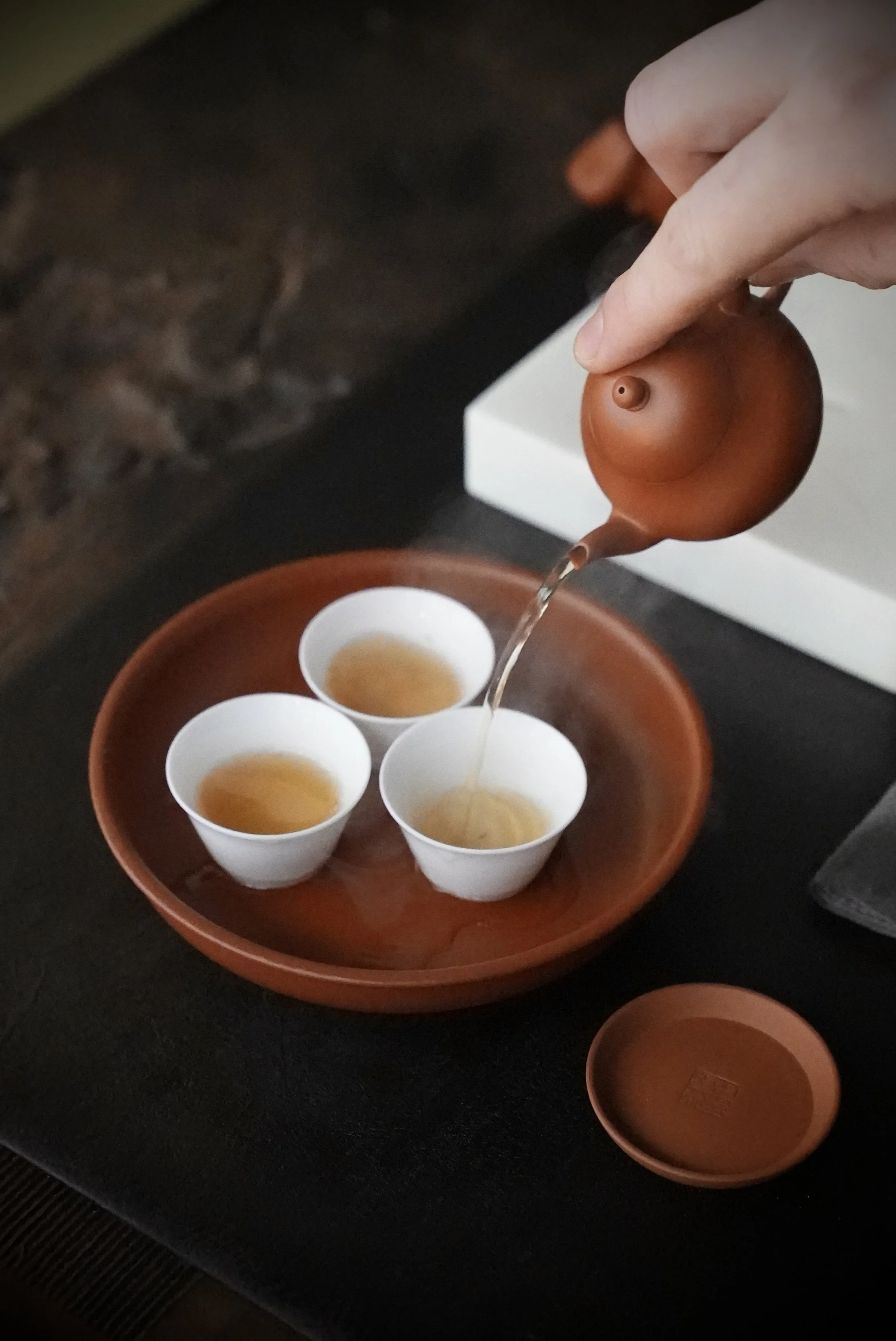
The Chaozhou Gongfu Tea Tradition and Zhu Ni Teapots
The Gongfu tea tradition, known as Chaozhou Gongfu Tea or Chaoshan Gongfu Tea, is a cultural treasure from the Chaoshan region of Guangdong Province. Revered as the pinnacle of Chinese tea culture, it is often referred to as the “Chinese Tea Ceremony” due to its refined techniques and rich heritage. While Chinese tea culture flourished during the Tang Dynasty, Chaozhou Gongfu Tea rose to prominence during the Song Dynasty and boasts a history spanning over a thousand years. Recognised as the origin of noble tea rituals, it has influenced Japanese Sencha-do and the tea traditions of Taiwan. As a holistic practice, Chaozhou Gongfu Tea seamlessly blends spirit, etiquette, brewing techniques, tea appreciation, and the art of savouring, making it the heart of Chinese tea artistry.
At the core of this tea tradition lies the teapot, an indispensable element of the Gongfu tea experience. Just as Yixing Zisha (purple clay) teapots are celebrated in northern China, the Chaozhou hand-thrown teapot, also known as the Chaozhou Zhu Ni Teapot, plays a vital role in southern tea culture. Originating in Chaozhou’s Fengxi district, this craft has been passed down for more than a thousand years. What distinguishes the Chaozhou Zhu Ni Teapot from its Yixing counterpart is its emphasis on the “hand-thrown” process. Artisans skilfully shape the clay by hand on a manually operated wheel, a technique requiring exceptional craftsmanship. This process requires precise pressure, along with pinching and pulling motions, producing teapots that embody a dynamic, organic charm that reflects the artisan’s personal touch.
The Chaozhou Zhu Ni Teapot is crafted from the region’s unique red clay, known locally as zhu ni. This natural material, a type of purple clay (Zisha), is sourced from deep underground deposits formed by river sediments. Rich in iron oxide, the clay undergoes a dramatic transformation during the firing process, changing from yellowish-brown to a striking vermilion hue. Its fine texture, low sand content, and crystalline structure give the teapot its exceptional qualities: a dense, smooth, and highly porous body. These properties allow the teapot to retain heat, preserve the tea’s fragrance, and maintain its original flavour. Moreover, the Zhu Ni teapot is remarkably resilient, capable of withstanding sudden changes in temperature.
Blending centuries-old techniques with the exceptional qualities of Chaozhou red clay, the craft of the Chaozhou hand-thrown teapot stands as a testament to the artistry and ingenuity of Chinese tea culture. Far more than simple vessels, these teapots are essential companions in the Gongfu tea tradition, elevating the brewing and savouring of tea into a refined art form.
If you’re interested in experiencing the Chaozhou Gongfu Tea Ceremony, we invite you to reach out to us via email or Instagram message—or visit us in person—for a Yushu Tea Tasting experience. Let us guide you through this timeless tradition.
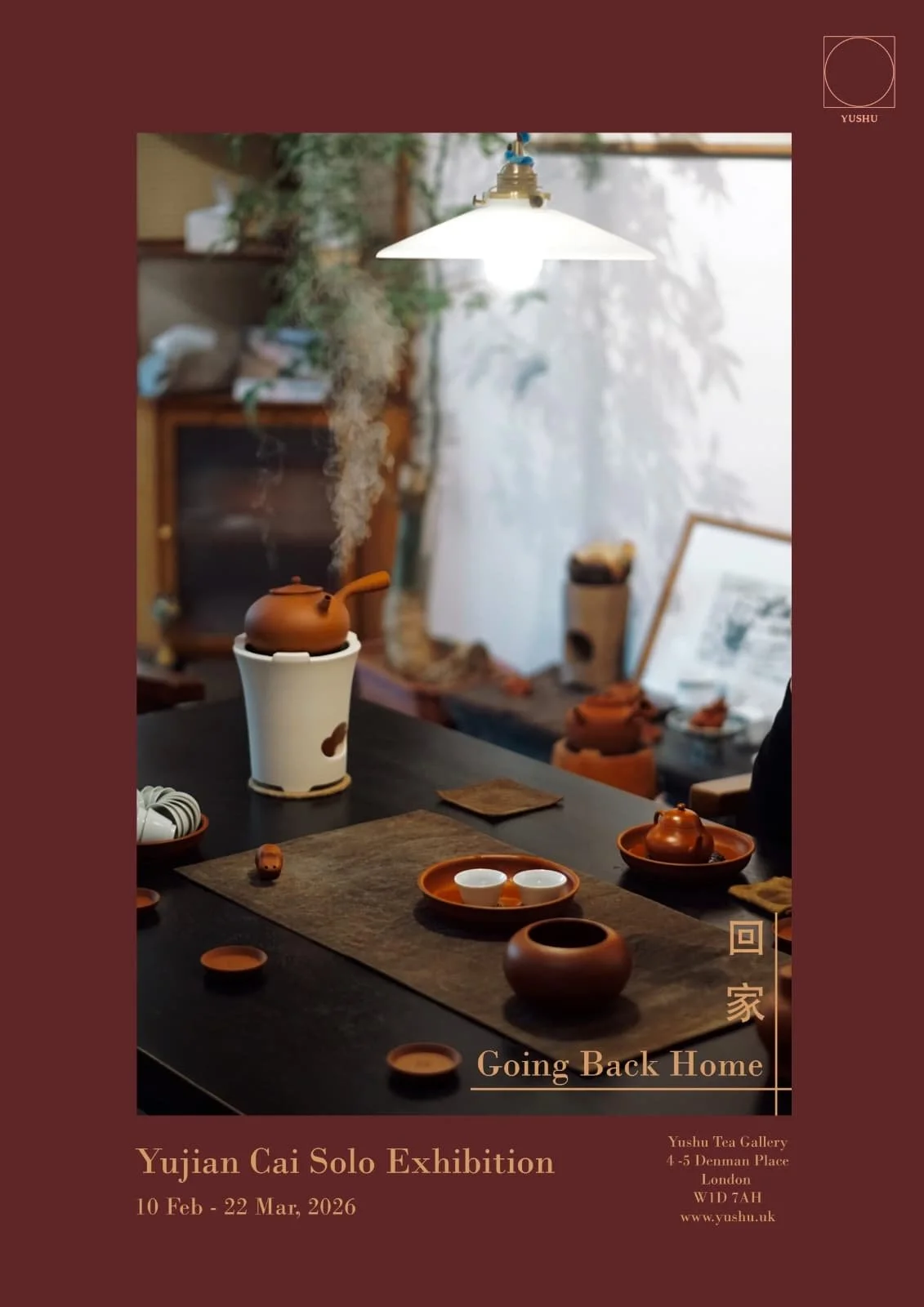
Exhibition - Q & A
In this exhibition, we hope to offer friends living away from home a warmth like returning home for the New Year. How is this sense of hometown reflected and expressed through the works in the exhibition?
1
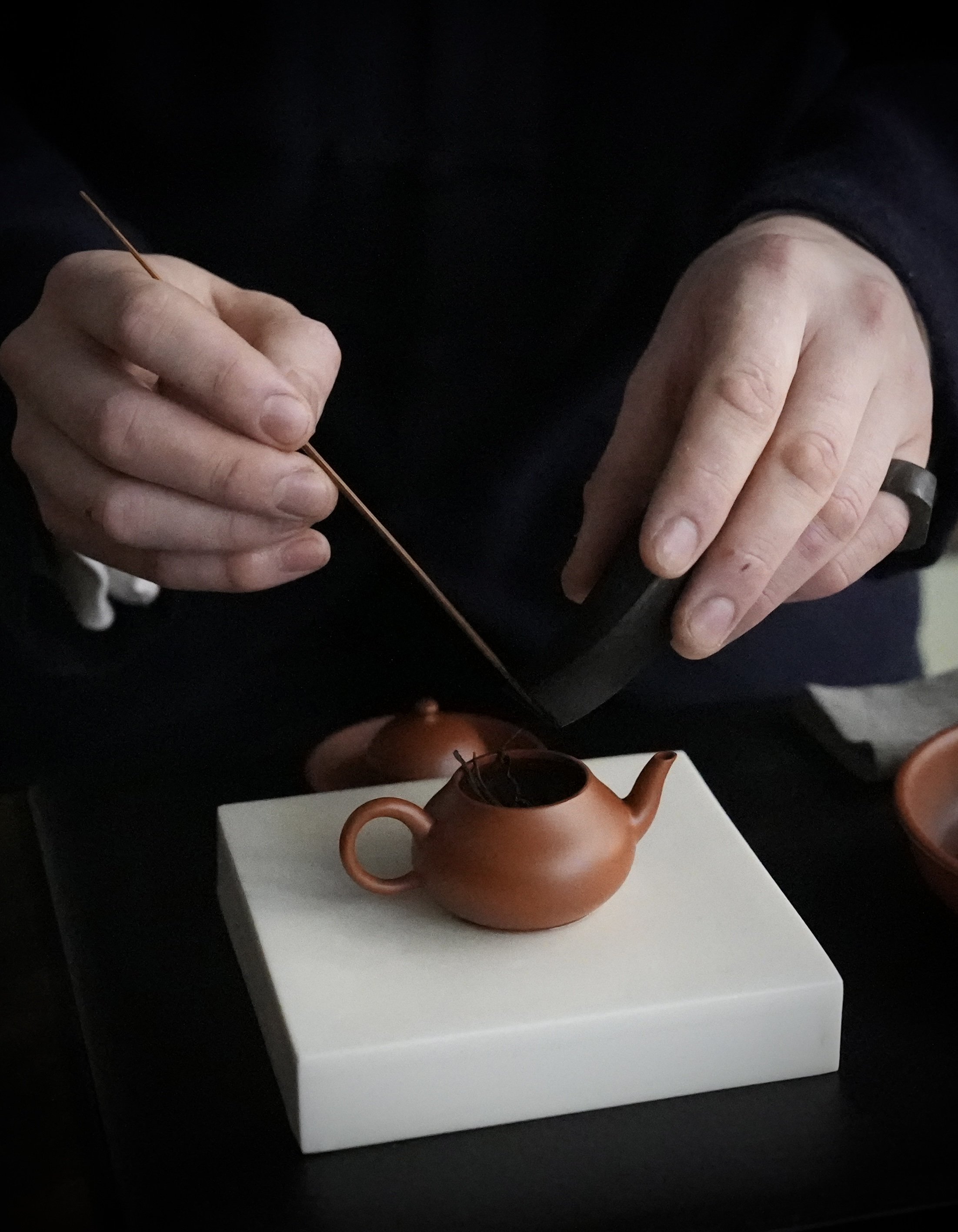
Formed from the clay of home, filled with the tea of home, and spoken through the language of home, these works embody the intertwined essence of place and practice. Each vessel is shaped by hand on the potter’s wheel using red clay from Chaozhou, a distinctive variety of purple-sand-like material native to Guangdong Province. Known for its fine texture and responsiveness, this clay yields thin-walled teapots that retain heat while allowing subtle exchange between liquid and air during brewing. Such craftsmanship continues a long local tradition of wheel-thrown Chaozhou teaware; unlike the precisely made purple-sand wares of Yixing, it carries an immediacy and spontaneity that reveal the maker’s hand in every curve.
The teapots serve a central role in Chaozhou Gongfu tea preparation, a brewing method that emphasises precision in proportion, attentive temperature control, and repeated short infusions to draw out layered aroma and flavour. Using the teapot for Dancong teas from Phoenix Mountain, this practice reunites material, terroir, and technique in a single, intimate gesture for families. In the Chaozhou dialect, drinking tea is called jiǎdiǎ, a term that gathers everyday hospitality, shared memories, and quiet feeling into a single word of home. Through brewing, tasting, and touch, a quiet familiarity emerges, allowing the warmth of home to persist even far from its source.
In a European cultural context, how can local audiences come to more fully understand the Chinese tea culture represented by Chaozhou Gongfu tea?
2

In a European cultural context, local audiences can begin to understand Chaozhou Gongfu tea most fully by entering into its rhythm rather than encountering it only as information on a wall text. During the exhibition, they can be invited to sit down in the Yushu space, slow their usual pace, and participate directly in a Gongfu tea session. Being gently guided to warm the teawares, measure the tea leaves by hand, and wait together for the water to reach the right temperature allows them to feel how care accumulates in each small, deliberate action. The process is unhurried yet purposeful, introducing a different sense of time in which attention itself becomes a form of hospitality.
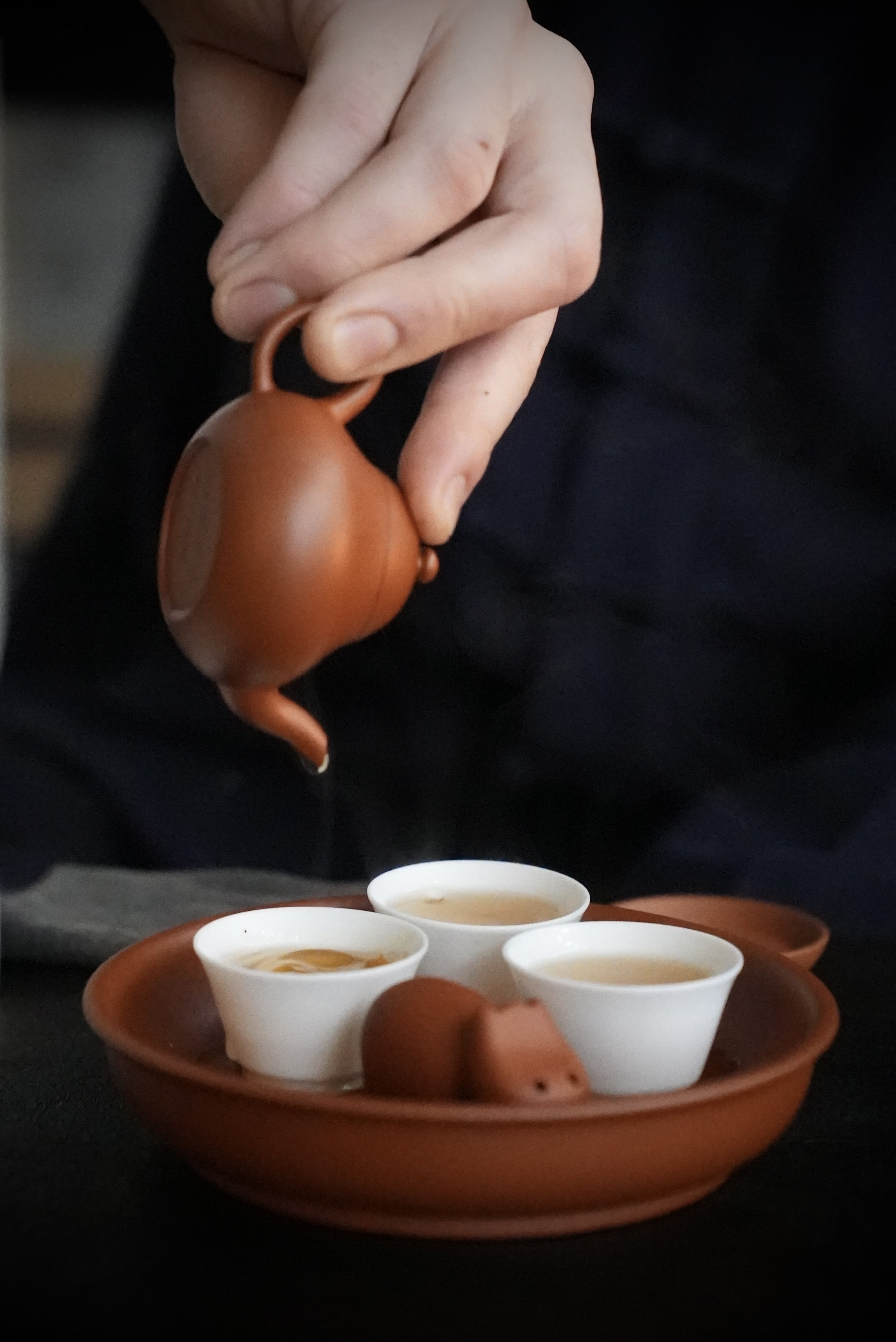
Three small porcelain cups, not big and almost toy-like in scale, are then arranged to form the character 品, suggesting that “to taste” here means to appreciate and to come into the same frequency as the tea and the people present. As visitors lift these tiny cups, feel the concentrated warmth resting in their palms, and inhale the dense aroma before the first sip, they experience how the modest size of the vessels draws people closer, physically and emotionally. At this moment, it can be explained: in Chaozhou, this is called gongfu, not because it is difficult or martial, but because it is worth the time and care, and worth sharing with those who matter. The many steps involved—warming the vessels, rinsing the leaves, precise measuring, attentive timing, repeated infusions—are understood less as rigid rules and more as a language of attention and patience.
Through this shared practice, Western visitors begin to sense that tea here is not merely a beverage but a way of structuring relationships. The culture of home in Chaozhou is rooted in close and intricate human connections, and Gongfu tea quietly reveals this. The guest is invited to drink first, followed by the elders, with the host drinking last. This order embodies a subtle art of humility and “after you,” placing respect and consideration into the choreography of serving and receiving. Nothing is loudly declared, yet everything is communicated through the direction of a pour, the sequence of cups, and the willingness to wait until all are served before tasting.
In this way, visitors do not simply learn about Eastern tea culture as an abstract idea. They feel it as human warmth passing through porcelain, as generosity expressed in repeated, careful servings, and as a mindful respect for everyday life distilled into the simple act of brewing and sharing tea. Cup by cup, they are introduced to a vision of home in which relationships, care, and time are held together in the hollow of the hand.
In this exhibition, you have created more than fifty different teapot forms and vessels. How has this process of making influenced the techniques and aesthetic direction of your future work?
3
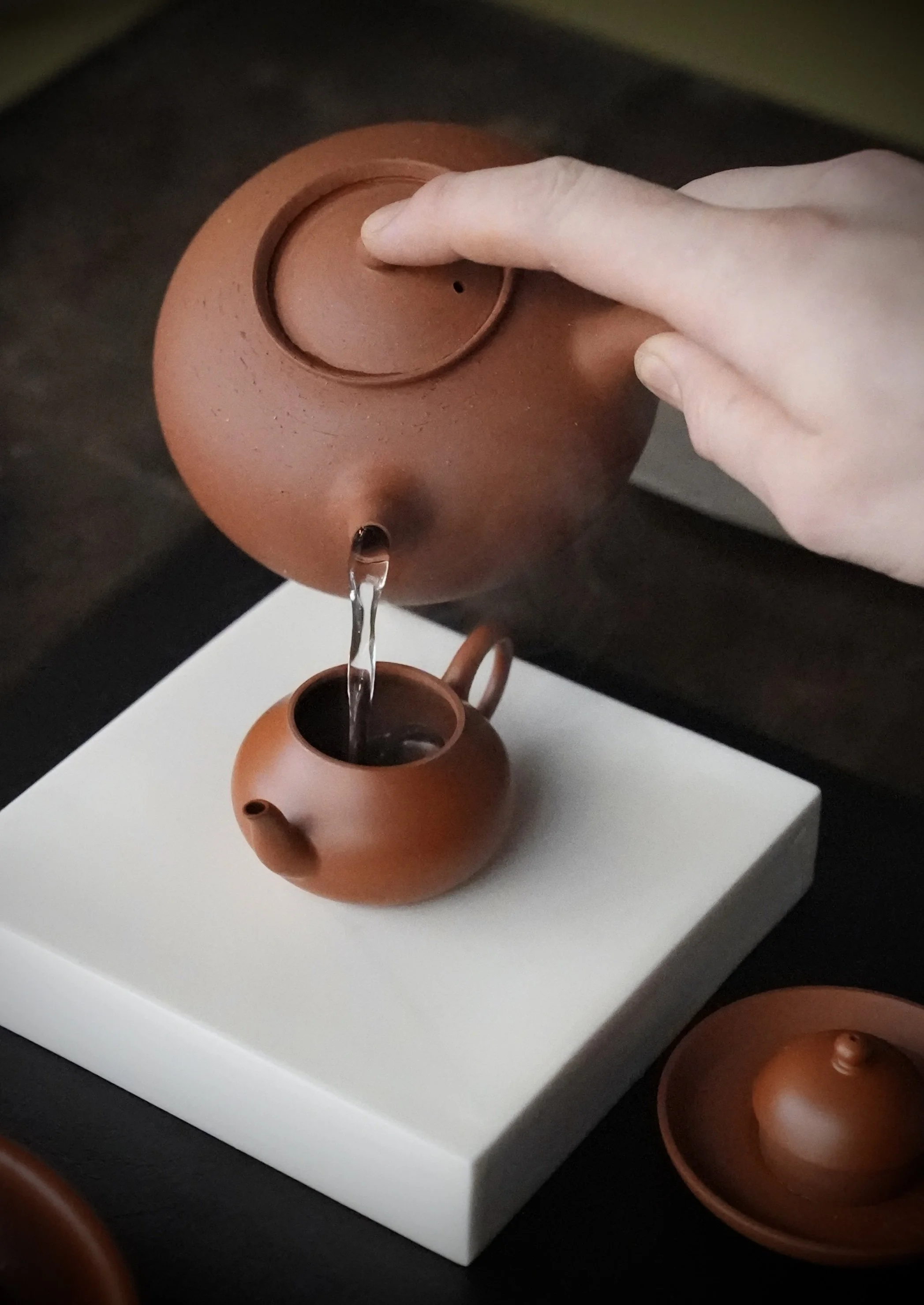
This exhibition has been like a key, opening several new doors for my practice. It showed me that I am not limited to only a few traditional teapot forms, but that there are many possibilities for shape and variation.
Creating a wider range of Gongfu teaware also allows different vessels to be combined and used together, bringing greater richness and playfulness to this traditional brewing method. At the same time, the process deepened my sensitivity toward objects themselves.
Moving forward, this experience will shape my future work to feel even more “Chaozhou,” and also more distinctly “my own,” strengthening the recognisability of my style while carrying a stronger sense of local handicraft and identity.
Among the many cultural traditions of Chaozhou, which have had the most profound influence on you, and how is that reflected in the works presented in this exhibition?
4
Over the past year, I have devoted myself day and night to creating for this exhibition. What I make in this exhibition is not a commercial product, but a vessel for time. In the body of works, I explored and reinterpreted older and varied teapot forms, weaving elements of Chaozhou’s development from the late Qing dynasty through the Republican period into the pieces.
In the process of making teapots, one must first prepare the right state of mind, working slowly and attending carefully to every detail. I hope that when people use these vessels to brew tea, they can feel this temperament through their hands, allowing themselves to settle and become calm. Only by brewing each infusion with care, patience, and quiet focus can one cultivate the right mindset, and only then does the tea truly taste good. I believe this is what Chaozhou Gongfu tea seeks to teach us all.
In the Chaoshan region, we emphasise eating the tea (吃茶). How do the vessels used in Gongfu tea express and embody this way of engaging with tea?
5
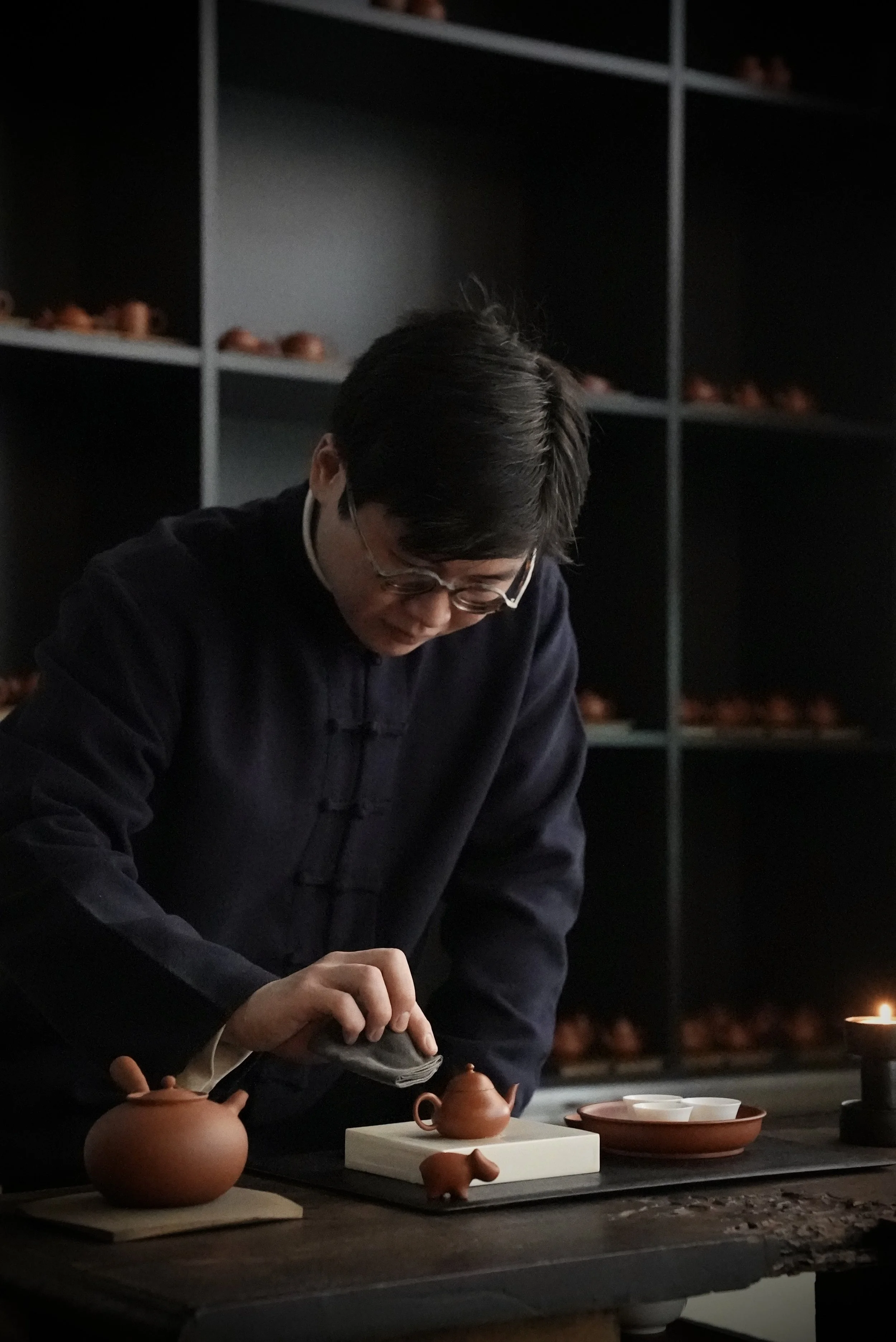
Gongfu teaware is not merely a set of tools for brewing tea, it turns tea into something as everyday and nourishing as tea-rice(茶米), a warm and essential companion to daily life. In Chaozhou, it is often said that one would rather skip a meal than skip tea, because whatever happens, one must first drink a cup of tea to steady the mind and body. Just as daily life follows the rhythm of three meals, Gongfu tea is shared after breakfast, lunch, and dinner, its presence as constant and familiar as the rice on the table in Chinese culture.
This cup of tea after a meal is as crucial as rice itself, yet what it offers is slightly different, not fullness of the stomach, but a gentle settling of the spirit. Gongfu tea is rooted in Gongfu, that included the time and care invested with intention, and the willingness to give one’s attention fully to water, leaves, and company. It belongs to everyday life, yet it is never ordinary, because each brewing asks the hand to slow down and the mind to return to the present moment. The tea after a meal is time reclaimed from busyness, a brief interval in which people can breathe, speak, or simply sit together. Amid the hustle and bustle of urban life, it opens up a moment of stillness, an oasis in an otherwise endless desert. In this sense, it is not only the gongfu of tea, but the gongfu of living.